
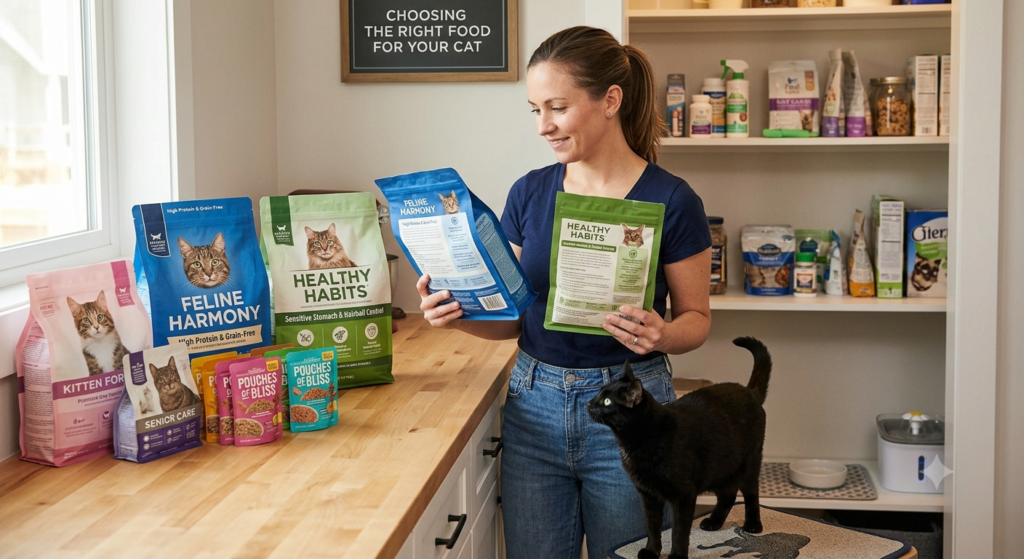
Walk down any pet food aisle and every bag claims to be “complete and balanced.” The real differences that matter for your cat are about life stage, not marketing. Here’s a straightforward breakdown.
Kittens (up to 12 months)
Kittens need roughly twice the protein and calories per kilogram of body weight compared to an adult cat, to support rapid growth. Look for a food specifically labelled for kittens or “all life stages,” with added DHA for brain and eye development. Free-feeding is generally fine at this stage since kittens rarely overeat.
Adult cats (1–7 years)
Once growth slows, calorie needs drop — an adult formula with moderate protein and controlled fat keeps weight stable. This is also the stage where indoor-vs-outdoor lifestyle matters most: an indoor cat with less daily activity usually needs a lower-calorie formula than one that spends time outside.
Senior cats (7+ years)
Older cats often need softer textures for dental comfort, added joint support (glucosamine and chondroitin are common), and reduced sodium to go easier on the kidneys. If your senior cat has started eating less, warming wet food slightly can make it more appealing.
Reading the label
Look for a named protein source (“chicken,” not “meat by-products”) as the first ingredient, and check the guaranteed analysis for protein and fat percentages appropriate to your cat’s life stage. Avoid switching foods abruptly — transition over 5–7 days by mixing old and new food to avoid digestive upset.
You can browse our full range of cat food, by life stage, in the shop — all cash on delivery, delivered across Lahore.